

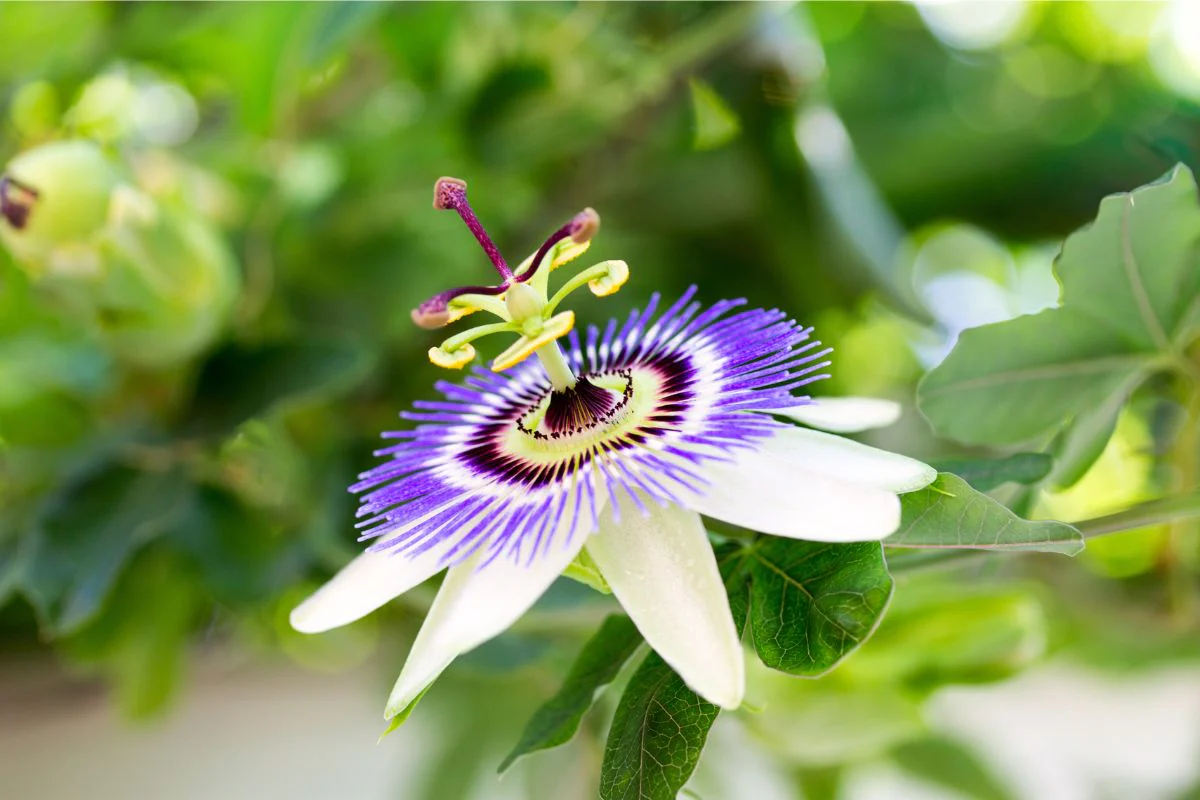
If you’ve ever struggled to fall asleep because your mind won’t slow down, you’re not alone. Modern life—especially in fast-paced urban environments—has made stress-related insomnia increasingly common. One herbal remedy that continues to gain attention for its calming properties is Passiflora incarnata, commonly known as passion flower.
Used for centuries in traditional medicine, passion flower is now backed by growing scientific research suggesting it may help reduce anxiety and improve sleep quality—naturally and gently.
In this article, we’ll explore:
- What passion flower is
- How it works as a natural sedative
- Scientific evidence for sleep support
- Safety, dosage, and best forms to use
What Is Passion Flower?
Passion flower refers primarily to Passiflora incarnata, a climbing vine native to North America but cultivated worldwide. It features distinctive purple and white flowers and has been traditionally used to manage:
- Anxiety
- Restlessness
- Nervous tension
- Insomnia
Importantly, passion flower is not chemically sedating in the same way prescription sleep medications are. Instead, it promotes relaxation by gently calming the nervous system.
How Passion Flower Works for Sleep (Mechanism of Action)
The sedative effects of passion flower are largely attributed to its influence on GABA (gamma-aminobutyric acid)—the brain’s primary inhibitory neurotransmitter.
1. Increases GABA Activity
Passion flower contains flavonoids such as:
- Chrysin
- Vitexin
- Isovitexin
- Apigenin
These compounds may increase GABA levels in the brain or enhance its binding to GABA receptors. When GABA activity rises:
- Brain excitability decreases
- Nervous system activity slows
- Muscle tension reduces
- Mental chatter quiets
This creates the ideal physiological environment for sleep onset.
2. Reduces Anxiety (Anxiolytic Effect)
Many sleep problems stem from anxiety. Passion flower’s calming properties help lower psychological stress without causing heavy sedation. Clinical research has shown it may reduce symptoms of generalized anxiety disorder, which indirectly improves sleep latency (the time it takes to fall asleep).
3. Mild Sedative Without Next-Day Grogginess
Unlike benzodiazepines or strong hypnotics, passion flower does not typically cause:
- Dependence
- Significant cognitive impairment
- Severe morning drowsiness
This makes it attractive for individuals seeking natural sleep support.
Scientific Evidence on Passion Flower and Sleep
Research on passion flower is promising, though more large-scale studies are needed.
Clinical Highlights
- Sleep Quality Study: A small randomized trial found that participants who consumed passion flower tea reported improved subjective sleep quality compared to placebo.
- Anxiety Reduction Studies: Several trials indicate that passion flower extract can reduce preoperative anxiety comparably to some pharmaceutical agents—but with fewer side effects.
- Combination Formulas: Passion flower is often used alongside valerian root and lemon balm in herbal sleep formulas, where synergistic calming effects are observed.
While more extensive research is needed, current evidence supports its role as a mild natural sedative.
Forms of Passion Flower for Sleep
You can find passion flower in several preparations:
1. Tea (Infusion)
- Traditional and gentle
- 1–2 grams dried herb steeped for 10–15 minutes
- Best taken 30–60 minutes before bed
2. Tincture
- Alcohol-based extract
- Faster absorption
- Typically 30–60 drops before bedtime (follow product instructions)
3. Capsules or Standardized Extracts
- Convenient and consistent dosing
- Often standardized to flavonoid content
4. Combination Sleep Formulas
- Frequently paired with magnesium, valerian, or melatonin
- Useful for moderate insomnia
Benefits of Passion Flower for Sleep
- Promotes natural relaxation
- Helps reduce anxiety-induced insomnia
- Non-habit forming (based on current evidence)
- Mild and suitable for long-term supportive use
- May improve sleep quality rather than simply inducing sedation
Who Can Benefit Most?
Passion flower may be particularly helpful for:
- People with racing thoughts at night
- Stress-related insomnia
- Mild to moderate anxiety
- Individuals who want a natural alternative to pharmaceutical sleep aids
If your sleep issues are primarily due to chronic pain, hormonal disorders, or severe psychiatric conditions, professional evaluation is recommended.
Safety and Precautions
Passion flower is generally well tolerated, but some precautions apply:
Possible side effects:
- Dizziness
- Mild drowsiness
- Nausea (rare)
Avoid or consult a healthcare provider if:
- Pregnant or breastfeeding
- Taking sedatives, benzodiazepines, or antidepressants
- Using blood pressure medications
Always start with the lowest effective dose.
Passion Flower vs. Pharmaceutical Sleep Aids
| Feature | Passion Flower | Prescription Sedatives |
|---|---|---|
| Dependency Risk | Low | Moderate–High |
| Next-Day Grogginess | Rare | Common |
| Mechanism | GABA modulation (mild) | Strong CNS suppression |
| Best For | Mild insomnia | Severe insomnia |
Passion flower works best as a supportive tool—not a knockout sleep agent.
How to Maximize Results
For best outcomes, combine passion flower with:
- A consistent sleep schedule
- Reduced evening screen exposure
- Magnesium-rich nutrition
- Stress management practices
- Limiting caffeine after 2 PM
Herbs work best when lifestyle supports them.
Final Thoughts: Is Passion Flower Worth Trying for Sleep?
If your sleep struggles are driven by stress, anxiety, or mental overactivity, passion flower offers a scientifically plausible and traditionally validated solution. Its ability to gently enhance GABA activity makes it one of the most promising herbal sedatives for natural sleep support.
While it may not replace strong hypnotic medications for severe insomnia, it shines as a safe, non-habit-forming option for mild to moderate sleep disturbances.
If you’re exploring natural sleep aids, passion flower is certainly worth considering—especially when used thoughtfully and consistently.