

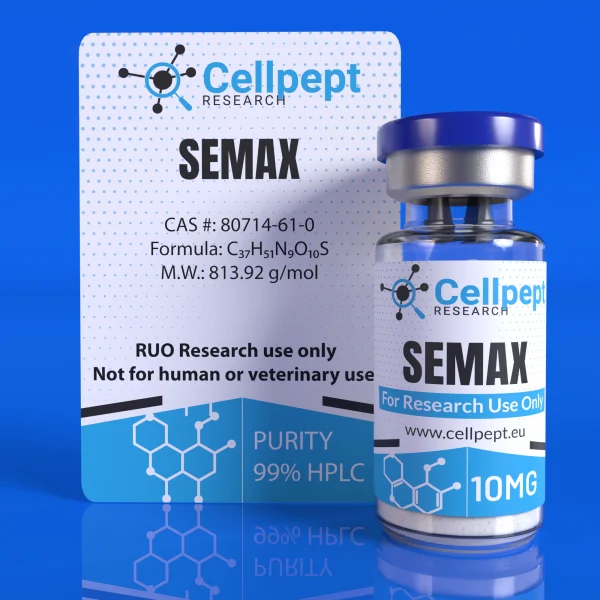
In a world where mental performance has become just as important as physical performance, people are constantly searching for ways to improve focus, memory, productivity, and cognitive resilience.
One compound attracting increasing attention in nootropic and peptide discussions is Semax.
Originally developed as a peptide-based compound for neurological research, Semax has become known for its potential role in supporting mental clarity, concentration, learning, and cognitive recovery.
But what exactly is Semax—and why are some people interested in it over traditional cognitive-enhancing medications?
Let’s explore.
What Is Semax?
Semax is a synthetic peptide studied for its potential effects on brain function and neurological signaling.
It belongs to a category of compounds often discussed for their possible influence on:
- Attention and focus
- Memory formation
- Mental performance
- Stress adaptation
- Cognitive resilience
Unlike traditional stimulants that may produce immediate energy or activation, Semax is often explored as a compound intended to support cognitive processes without strong stimulant effects.
Why Semax May Be Better Than Some Traditional Cognitive Medications
Important note: Semax is not approved in many regions for general cognitive enhancement and should not be viewed as a proven replacement for established medical treatments.
1. May Support Focus Without Traditional Stimulant Effects
Many people look for alternatives to conventional stimulant-based approaches because those can sometimes lead to:
- Energy crashes
- Jitters
- Restlessness
- Difficulty sleeping
Semax has generated interest because it may support mental performance without functioning like a typical stimulant.
2. Potential Cognitive Enhancement Beyond Alertness
Traditional focus products often prioritize short-term stimulation.
Semax has been studied for broader cognitive support including:
- Learning efficiency
- Memory performance
- Information processing
- Mental endurance
This makes it appealing in discussions around long-term brain optimization.
3. Interest in Neuroprotective Potential
One of the reasons Semax receives attention is its investigation in neurological settings for potential support of:
- Brain adaptation
- Cognitive recovery
- Neural signaling balance
Research in this area continues to develop.
4. May Support Productivity Under Stress
Mental performance often declines under stress.
Semax has attracted attention because it is sometimes explored for helping maintain:
- Focus under pressure
- Mental clarity
- Cognitive consistency
5. Different Approach Compared With Conventional Options
Traditional cognitive medications may act primarily through stimulation.
Semax is often discussed as a peptide-based approach intended to support the systems involved in learning and mental function.
How to Use Semax
⚠️ Important: Semax is not widely approved for general use in many countries. Use should follow professional guidance and local regulations.
Intranasal Administration
The most commonly discussed method is:
- Nasal administration
- Measured dosing according to product instructions
This route is frequently chosen for convenience and absorption.
Consistent Short-Term Protocols
Protocols vary depending on context, but common themes include:
- Structured usage periods
- Monitoring individual response
- Avoiding unnecessary long-term continuous use
Combine With Healthy Cognitive Habits
Semax should not replace fundamentals such as:
- Sleep quality
- Exercise
- Nutrition
- Stress management
- Time management
Side Effects of Semax
Available reports suggest Semax is generally tolerated in limited research settings, but side effects remain possible.
Commonly Reported Effects
- Mild nasal irritation
- Headache
- Temporary fatigue
Less Common Effects
- Dizziness
- Temporary overstimulation
- Changes in alertness
Unknown Long-Term Considerations
Current limitations include:
- Limited large-scale human studies
- Incomplete long-term safety data
- Variable product quality outside regulated environments
Who May Be Interested in Semax?
Semax is commonly discussed among people interested in:
- Mental performance
- Productivity support
- Focus and concentration
- Learning efficiency
- Cognitive wellness
Who Should Avoid Semax?
Semax may not be appropriate for:
- Pregnant or breastfeeding individuals
- Children unless medically supervised
- People with neurological or psychiatric conditions without physician guidance
- Anyone replacing prescribed treatment without medical advice
Semax vs Traditional Cognitive Approaches
| Feature | Semax | Traditional Cognitive Products |
|---|---|---|
| Primary Goal | Cognitive support | Stimulation |
| Energy Crash | Potentially lower | Can occur |
| Focus Support | Investigated | Common |
| Long-Term Data | Limited | More established |
| Dependency Concerns | Under study | Depends on product |
Final Thoughts: Is Semax the Future of Cognitive Performance?
Semax has become one of the most discussed peptides in the world of focus, memory, and brain optimization.
Its appeal comes from the possibility of supporting mental clarity and cognitive performance through a different mechanism than traditional stimulants.
At the same time, enthusiasm should be balanced with evidence. Research remains limited in many regions, and stronger clinical data is needed before broad conclusions can be made.
For anyone exploring advanced cognitive approaches, professional guidance and evidence-based decision-making remain essential.